
Our specialism
Marketplace development, our specialism
Marketplaces are what we are best at. A marketplace is two products in one: the supply side and the demand side, each useless without the other. We build both, together with the money movement and trust mechanics that decide whether either side comes back.
What you get
Money movement that holds up
Split payments, payouts, refunds and chargebacks built as first-class parts of the product, because by the time volume arrives they are load-bearing.
Trust and safety tooling
Verification, reviews, reporting and the moderation screens someone needs when a transaction goes wrong outside office hours.
Matching that makes a thin catalogue feel full
Search, filtering and ranking tuned for the early days, when supply is sparse and an empty result page costs you a buyer permanently.
Marketplace models we build
The model decides the product. A rental calendar, a service quote and a resale listing look similar on a slide and share almost no logic underneath.
Booking and rental marketplaces
Availability, calendars, deposits and cancellation rules, for experts, spaces, equipment and anything bought by the hour or the night.
Service and expert marketplaces
Profiles, verification, enquiries and quotes, with the matching that turns a brief into the right three providers.
Product and resale marketplaces
Listings, inventory, shipping and returns, including the condition grading and authenticity checks that preloved goods need.
B2B and procurement platforms
Account hierarchies, approvals, invoicing and the integrations with the systems a buyer already runs.
Discovery and lead-generation platforms
Directories where the transaction happens off-platform, and the product has to prove its value through enquiries and verified supply.
Vertical communities with commerce
A membership or content product that adds payments, listings and payouts once the audience is there.
Built for all three sides of the platform
Most marketplaces are designed for buyers and patched for everyone else. We design for the three people who decide whether it works.
For the supply side
Onboarding, listing creation, calendars and inventory, and a dashboard that shows earnings, payouts and what to do next, so sellers stay.
For the demand side
Search, filters and ranking, a checkout that does not lose people, messaging, reviews and the notifications that bring a buyer back.
For the operator
Admin and moderation tools, dispute and refund handling, fee and commission control, and the reporting that tells you where the marketplace is leaking.
Custom build, platform or both
The right foundation depends on how different your model is, how fast you need to launch and who will run it afterwards.
Build it custom
When the matching, pricing or payout logic is the business. You own the code and the model, and nothing fights you as you grow.
Launch on a platform
When a conventional marketplace model fits and speed matters. We set it up and extend it where your product needs to differ.
Start on a platform, replace what hurts
Launch quickly, then rebuild the specific parts that become the constraint, instead of a risky rewrite or a decision made too early.
How we approach it
The interesting problems are rarely the listing pages. They are payouts and split payments, refunds and chargebacks, identity and verification, the matching and search that make a sparse catalogue feel full, and the moderation tools someone needs when a transaction goes wrong at 9pm. We build these as first-class parts of the product rather than as things to add once volume arrives, because by then they are load-bearing.
We have shipped marketplaces for lighting design experts, sports and wellness bookings, childcare discovery, housing for educators and resale fashion, so the patterns below are ones we have built more than once rather than ones we have read about. That repetition is the point of hiring a specialist: the decisions that sink a first marketplace are mostly the same few, and we know where they hide.
We are also comfortable choosing the platform. Where a marketplace platform gets you to market sooner, we will say so and build on it. Where its model fights your business, we build the parts that need to be yours and integrate the rest. You get an honest recommendation, not whichever option we happen to sell.
Already building on a marketplace platform? We also offer Sharetribe development and customization, from first setup to taking over an existing marketplace.
Problems this solves
The cold start problem
Neither side joins without the other. The product has to be useful to the first supplier with no buyers, and to the first buyer with little choice.
Disputes arriving faster than tooling
Refunds, failed payouts and bad actors are operations problems before they are engineering problems, and support cannot run them from the database.
Supply that churns quietly
Sellers leave when payouts are slow, listings are invisible or the dashboard tells them nothing. Retention is a product surface, not a marketing one.
Leakage off the platform
Once two people have met, the fee is the only reason to stay. The product has to keep earning it through payments protection, reviews and repeat-booking tools.
Search that cannot find what exists
Filters built for a hundred listings break at ten thousand. Relevance, facets and availability need designing before the catalogue grows, not after.
A build that cannot change pricing
Commission rules, tiers and promotions change monthly. If each change is a deployment, the business learns slowly.
How we work

Ideate
We collaborate with clients to define goals, explore ideas, and create a clear plan for a successful software solution.

Develop
Our team builds robust, scalable applications using modern technologies and best development practices.

Maintain
We provide ongoing support, updates, and optimizations to ensure your software remains reliable and efficient.

Scale
We help your solution grow with your business by enhancing performance, adding features, and supporting larger user bases.
What this includes
Products we designed, built, and still run.
Our portfolio showcases projects delivered with expert craftsmanship and exceptional quality.
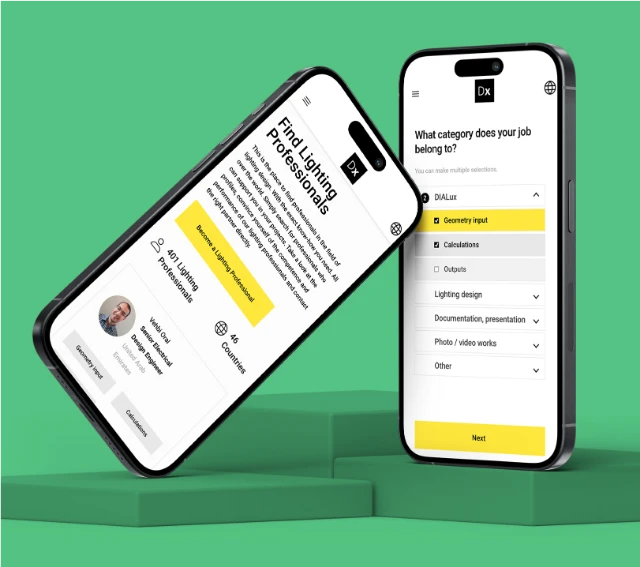
Marketplace for lighting design experts
A two-sided marketplace connecting specifiers with certified lighting professionals worldwide — verified profiles, project briefs and direct contracting, with payouts handled end to end.
- React
- Node.js
- Stripe Connect
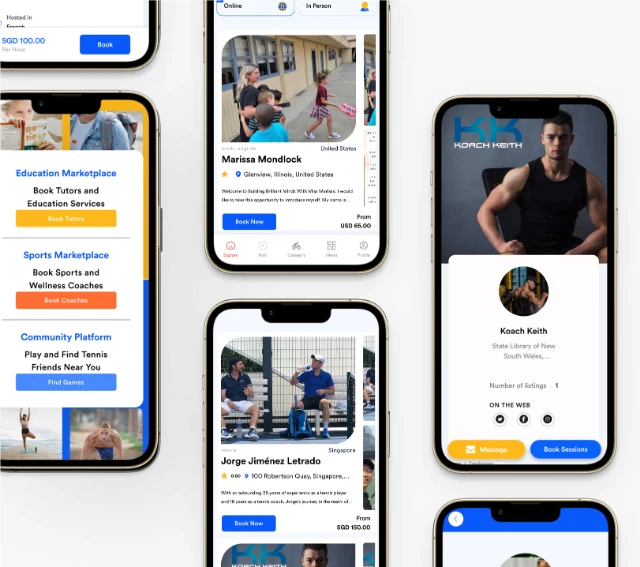
Booking platform for sports, wellness and tutoring
A booking platform where customers find verified sports, wellness and tutoring experts, see real-time availability and pay in one flow.
- React Native
- Node.js
- MongoDB
- Stripe
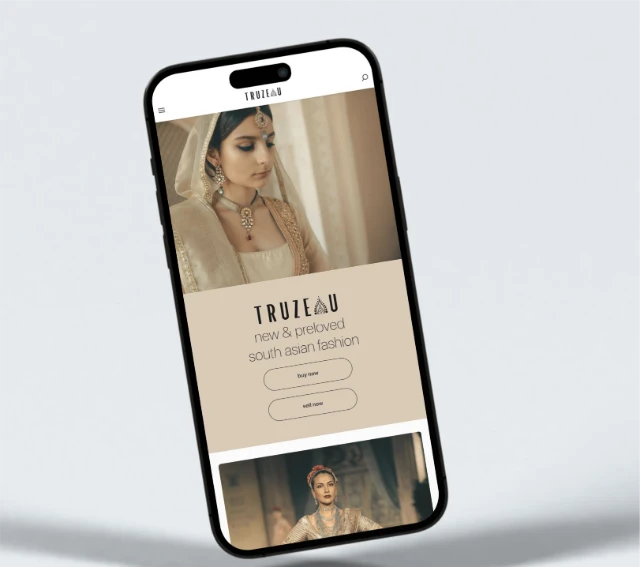
New & preloved fashion marketplace
Seller onboarding, condition grading and an editorial storefront tuned for mobile-first browsing.
- React
- Node.js
- Stripe
- AWS
Questions we get asked
How do payments and payouts actually work?
Usually Stripe Connect: buyers pay the platform, funds are held or split, and sellers are paid out on a schedule after onboarding and identity checks. The engineering that matters is the unhappy path — a payout that fails, a refund after a payout, a seller who never completes verification — and that is where most of the build time goes.
How do you deal with the cold start?
By not pretending the marketplace is one. Early on the product is concierge: supply is recruited by hand, matching can be manual behind the scenes, and the software focuses on making the few transactions that exist excellent. We build for that phase deliberately instead of launching a two-sided product to an empty room.
What about KYC, tax and compliance?
Identity and bank verification come with the payment provider, and we build the flows around them. Tax treatment, marketplace liability and whether you are the merchant of record are decisions for your accountant and lawyer — we implement what they decide and make sure the data they will need is recorded from the start.
How long does it take to build a marketplace?
A focused first version, with one clear transaction flow, payments and the operator tools needed to run it, is typically a matter of months rather than weeks. The honest answer comes from scope: we start with a short discovery to decide what the first version must do and what it can wait for, then give a timeline and a fixed-price milestone plan.
Can you build an MVP first and grow it?
Yes, and we usually recommend it. The first version proves that people will transact, using the smallest set of features that can do so safely. It is built so that search, payments and the data model can grow without being thrown away.
Which technology do you build marketplaces with?
Mostly React and Node.js, with Stripe Connect for payments, and a search layer chosen to fit the catalogue. We choose the stack for your team and your model, not ours, and we write it to be taken over by whoever runs it next.
Do you also build mobile apps for marketplaces?
Yes. We build iOS and Android apps from one React Native codebase and share the business logic and API with the web product, so the two do not drift apart. Mobile is usually phase two, once the web flow has proven that people will transact.
Can you take over or improve a marketplace that already exists?
Yes. We start with an audit of the code, the payment flows and the operational tooling, and then agree a plan to stabilise it, add what is missing and retire what is not working. This includes marketplaces built on a platform.