
Custom software development
Software worth building usually exists because the off-the-shelf option forces your business to work the way the tool works. We start from the process you actually run and build around it.
What you get
Built around your actual process
We model the workflow you really run, including the parts living in spreadsheets and inboxes, so the software fits the business rather than the reverse.
Something clickable early
A working prototype arrives while changing direction is still cheap, because an argument about a screen someone can use is far more productive than one about a document.
Handover assumed from the start
Readable code, decisions written down, and a deployment your own team can run — the things that decide what year two costs.
How we approach it
That begins with modelling the real workflow, including the parts that live in spreadsheets, inboxes and people's heads. A prototype follows quickly, because an argument about a screen someone can click is far more productive than an argument about a document. From there it becomes a system with the unexciting essentials in place: tests, migrations, audit trails, and an administrative view for the people who have to operate it daily.
We also build it to be handed over rather than depended on. Readable code, decisions written down where the next person will look for them, and a deployment anyone on your side can run matter more across a product's life than any individual feature — they are what stops the second year costing more than the first.
Problems this solves
The tool forces the business to bend
Off-the-shelf software encodes someone else's process. When the workarounds start costing more than a build, custom is the cheaper answer.
Spreadsheets as load-bearing infrastructure
Critical operations running on a shared sheet with no history, no validation and no permissions is a risk that grows quietly until something is lost.
Only one person understands it
A system nobody else can change is a system that cannot be improved, and an availability risk the day that person is unavailable.
How we work

Ideate
We collaborate with clients to define goals, explore ideas, and create a clear plan for a successful software solution.

Develop
Our team builds robust, scalable applications using modern technologies and best development practices.

Maintain
We provide ongoing support, updates, and optimizations to ensure your software remains reliable and efficient.

Scale
We help your solution grow with your business by enhancing performance, adding features, and supporting larger user bases.
What this includes
Products we designed, built, and still run.
Our portfolio showcases projects delivered with expert craftsmanship and exceptional quality.
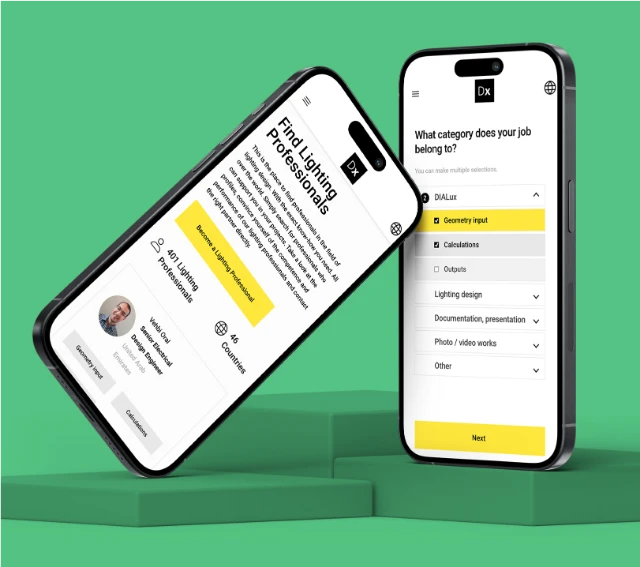
Marketplace for lighting design experts
A two-sided marketplace connecting specifiers with certified lighting professionals worldwide — verified profiles, project briefs and direct contracting, with payouts handled end to end.
- React
- Node.js
- Stripe Connect
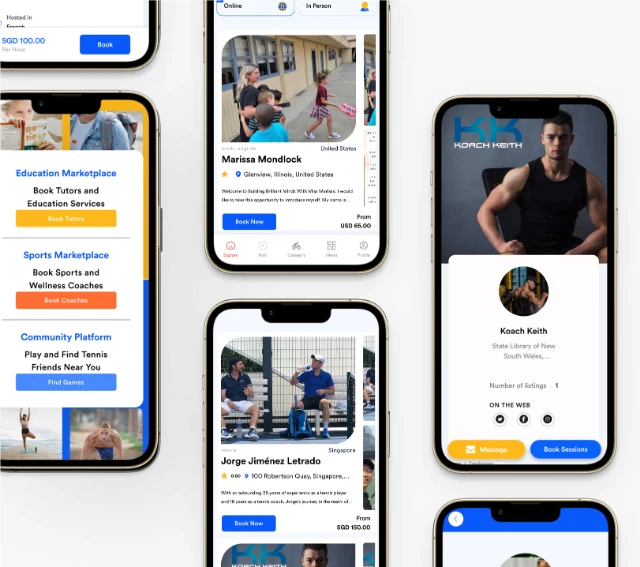
Booking platform for sports, wellness and tutoring
A booking platform where customers find verified sports, wellness and tutoring experts, see real-time availability and pay in one flow.
- React Native
- Node.js
- MongoDB
- Stripe

Housing platform for educators
Affordable housing discovery for teachers, with mapped inventory, eligibility screening and landlord onboarding.
- React
- Express
- PostgreSQL
- Mapbox
Questions we get asked
Should we build or buy?
Buy whenever a product does the job and your process can reasonably adapt — payments, email, analytics and auth are rarely worth building. Build where the process is the advantage, where the data is yours, or where integration between several bought tools is the actual product. We will tell you when the answer is buy, which is sometimes the end of the conversation.
How do you scope something that is not fully defined yet?
By splitting it: a short, fixed piece of discovery that produces a prototype and a written plan, then delivery in increments against that plan. Fixed-price for the whole of an undefined system is a fiction that gets paid for later in change requests, so we price what is known and keep re-planning cheap.
Who owns the code and the infrastructure?
You do, from the first commit — in your repository, your cloud accounts, your domains. We work in your accounts rather than ours precisely so that the handover is a non-event rather than a migration.
What happens after launch?
Whatever you need: a maintenance arrangement with us, a handover to your own team with documentation and pairing, or a period of support while you hire. The code is written on the assumption that someone else will maintain it, which is what makes any of those options real.