
UI/UX design
We design interfaces for products with real complexity behind them — where the job is not decoration but making a complicated thing feel like it only has one obvious next step.
What you get
Research that can change the plan
Watching people attempt the real task, early enough that what we learn can still alter what gets built rather than merely explain it.
A system, not a pile of screens
Components, tokens and patterns documented so the product stays coherent and the tenth screen is cheaper than the first.
Patterns for AI features
Interfaces for uncertainty, review, correction and provenance — the parts of an AI feature that decide whether anyone trusts it.
How we approach it
That starts with watching people attempt the actual task, which reliably contradicts the brief in useful ways. From there: structure before surface, a design system so the tenth screen costs less than the first, and prototypes tested while changing them is still cheap. Consistency is the point — a product where every screen is individually beautiful and collectively unfamiliar is harder to use than a plain one.
AI features need patterns the last decade of interface convention does not supply. How to show that an answer is uncertain, where a person reviews and corrects, how to cite the source a claim came from, what a half-finished streaming response should look like. We design for those explicitly, because an AI feature people cannot calibrate their trust against gets abandoned however good the model is.
Problems this solves
Every screen is beautiful and the product is confusing
Screens designed one at a time drift apart. Consistency is what makes a complex product learnable, and it comes from a system.
Features nobody finds
Work that was built, shipped and never discovered is a navigation and hierarchy problem, and it is cheaper to fix in a prototype.
An AI feature users cannot calibrate
When people cannot tell how confident a system is or where an answer came from, they either over-trust it once or abandon it permanently.
How we work

Ideate
We collaborate with clients to define goals, explore ideas, and create a clear plan for a successful software solution.

Develop
Our team builds robust, scalable applications using modern technologies and best development practices.

Maintain
We provide ongoing support, updates, and optimizations to ensure your software remains reliable and efficient.

Scale
We help your solution grow with your business by enhancing performance, adding features, and supporting larger user bases.
What this includes
Products we designed, built, and still run.
Our portfolio showcases projects delivered with expert craftsmanship and exceptional quality.
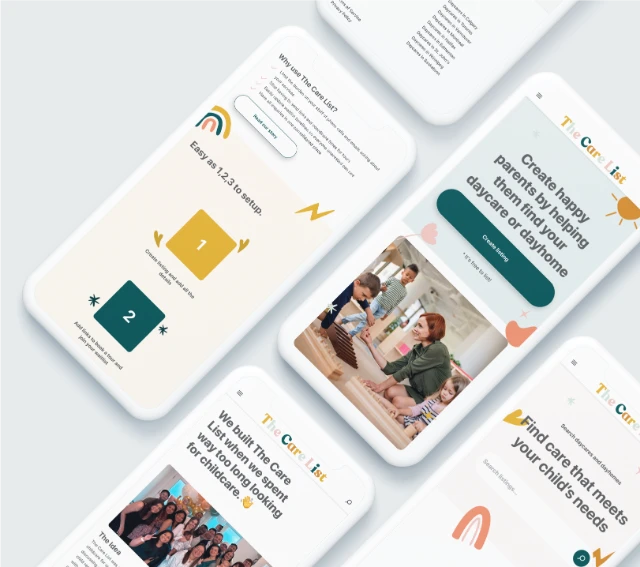
Childcare discovery and booking
Helps families find and book the right daycare, with licence verification, availability and enquiry management for providers.
- React
- Node.js
- MongoDB
- Twilio
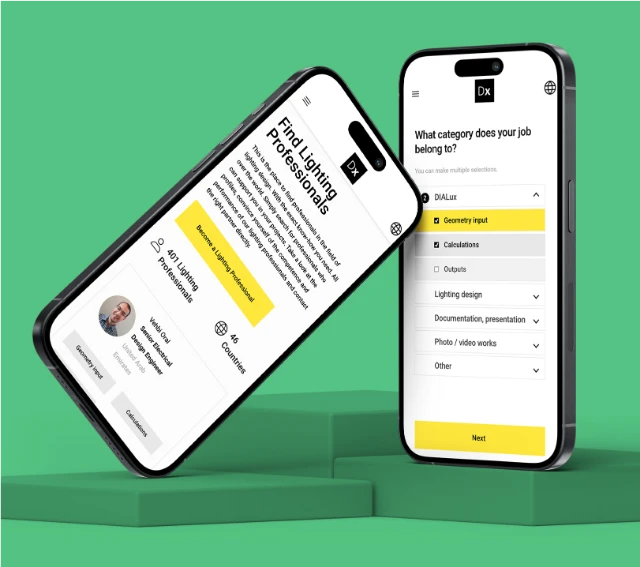
Marketplace for lighting design experts
A two-sided marketplace connecting specifiers with certified lighting professionals worldwide — verified profiles, project briefs and direct contracting, with payouts handled end to end.
- React
- Node.js
- Stripe Connect
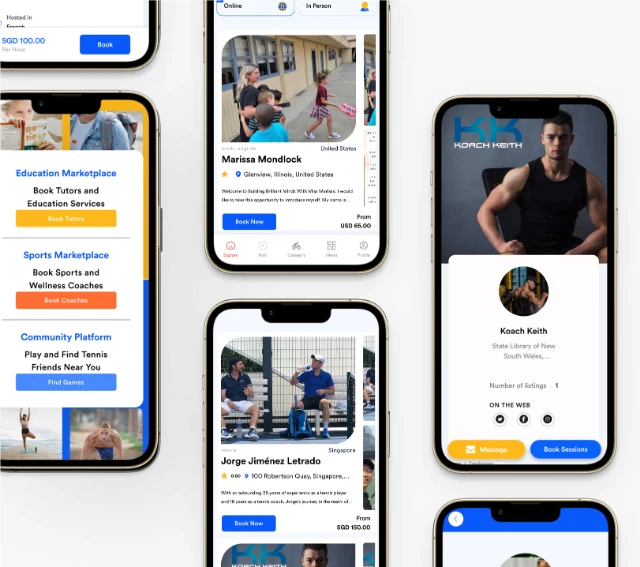
Booking platform for sports, wellness and tutoring
A booking platform where customers find verified sports, wellness and tutoring experts, see real-time availability and pay in one flow.
- React Native
- Node.js
- MongoDB
- Stripe
Questions we get asked
What does your research actually involve?
Talking to the people who will use the thing and watching them try the current version or a prototype — usually five to eight sessions, which is enough to find the serious problems. Plus whatever evidence already exists: support tickets, analytics, sales objections. The output is a short list of what to change, not a report nobody reads.
Do we get a design system we can keep using?
Yes, and it is built as the product is designed rather than as a separate exercise: tokens for colour, type and spacing, components with their states, and documentation of when to use which. It is handed over in Figma and implemented in code, so the two do not drift.
How do design and development overlap?
They run together. Design stays a step or two ahead rather than finishing first, developers review patterns while they are still cheap to change, and what is implemented gets checked against the design rather than assumed. A clean linear handover tends to produce screens that cannot be built as drawn.
How do you design for AI features specifically?
By treating uncertainty as a first-class state. That means showing where an answer came from, making the confidence legible, giving people an obvious way to correct or reject output, designing what a partial streaming response looks like, and deciding where a human must approve before anything happens. Conventional interface patterns do not cover these, so they are designed explicitly.